Which will you run out of first: power, cooling, space or people?
Most capacity plans are written around one number, usually rack space or total kilowatts. The facility looks full or empty depending on which number you read. The problem is that workloads do not consume one resource. They consume several at once, and the first limit you hit decides what you can run, however much headroom exists elsewhere.
What the Data Says
Uptime Institute's 2026 Global Data Center Survey reports that the share of respondents who say management is at least somewhat concerned about forecasting future data center capacity requirements has risen steadily, from 68% in 2024 to 76% in 2026. Uptime suggests this likely reflects uncertainty about the scale, timing and location of future demand, especially as operators assess how AI and higher-density workloads may affect demand for capacity, power and cooling.
There is a useful nuance in the same report. Concern about power availability was stable compared with 2025, and Uptime notes that most respondents already operate facilities and most have enough power for their near-term plans. The pressure, in other words, is less about having no power today and more about not knowing what will be needed, where, and when.
Uptime also reports that typical rack power density keeps rising slowly, and that more operators now report peak rack densities of 30 kW or above. Rising density means each rack draws more power and produces more heat, which moves the limit from floor space towards power and cooling.
Capacity Is Not One Number
A facility has several capacities, and they do not move together.
Power. Both the usable capacity at the utility and the capacity you can deliver down to each rack, through transformers, UPS systems and distribution. Power can be available in the building and still unavailable at the row where you need it.
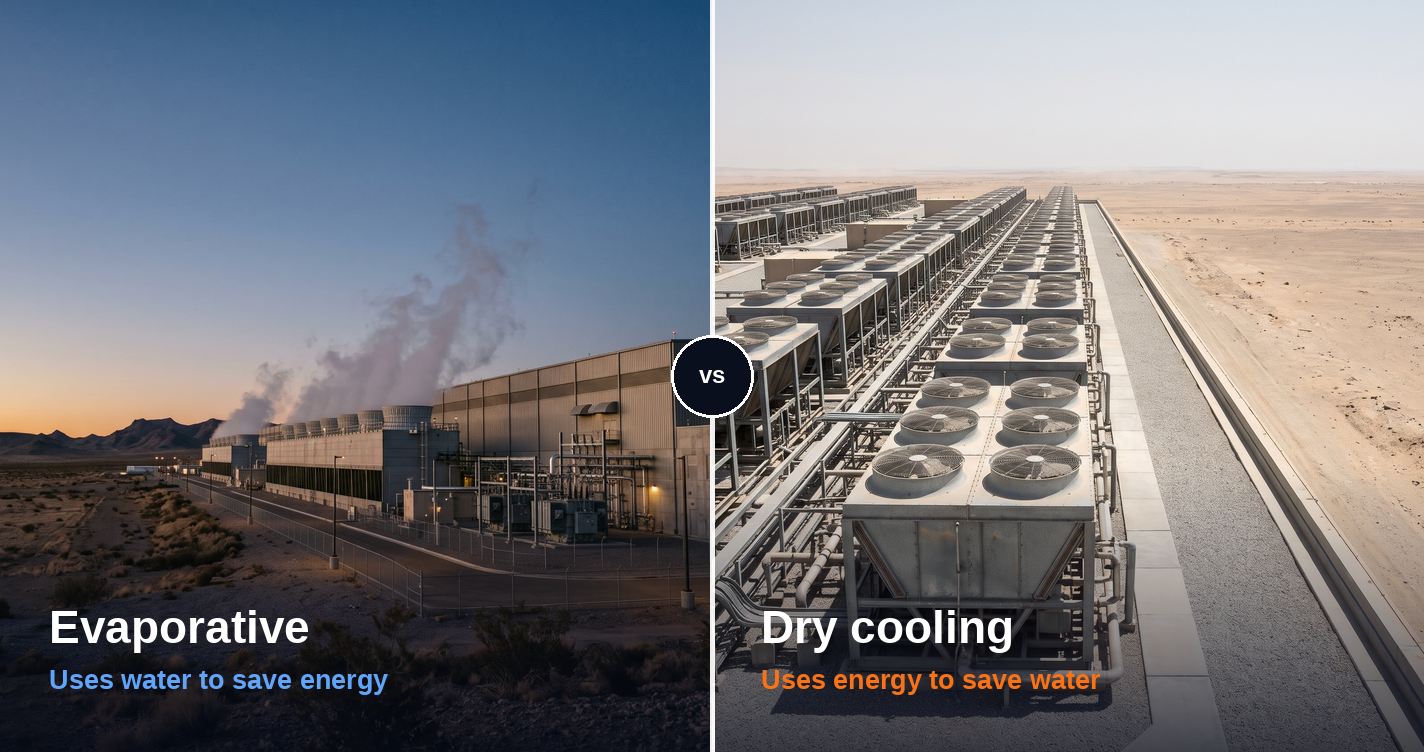
Cooling. Heat has to go somewhere. Cooling capacity is set by the design of the plant and the air or liquid distribution, and it often becomes the limit before power does when density rises. Our earlier post on cooling, energy and water trade-offs covers that side.
Space. Rack positions and floor area. Increasingly the least binding constraint, because density can compensate, unless power and cooling cannot follow.
Network and connectivity. Ports, cabling routes and bandwidth in the room and between sites.
People. Operations and engineering capacity. Uptime's 2026 survey release also reports that more than half of respondents have difficulty finding qualified candidates, so staffing is a real planning limit, not an afterthought.
The scarcest of these decides your usable capacity. A room can show spare rack positions and still be full, because the remaining positions have no power or cooling that can be delivered to them. That unused-but-unusable capacity is often called stranded capacity.
An Illustrative Example: Space on Paper
The following is a composite scenario, not a description of any one organisation.
An enterprise data center reports 30% free rack space. A new project asks for ten high-density racks. The space exists, but the cooling in that zone was designed for lower density, and the power feed to the row is close to its limit. Adding the racks means upgrading distribution and cooling first, which takes months and budget that were never in the plan.
Nothing is wrong with the facility. The plan was written against one number, and the project needed three.
Six Questions for Your Own Capacity Forecast
- Do we track power, cooling and space together, per zone and not only for the whole building? Aggregate numbers hide the constraint.
- What is our binding constraint today, and what will it be in two years? It often changes as density rises.
- How far can power actually be delivered? From utility to transformer to UPS to rack, where is the narrowest point?
- Who owns the demand forecast? If projects request capacity late, the forecast is only a record of surprises.
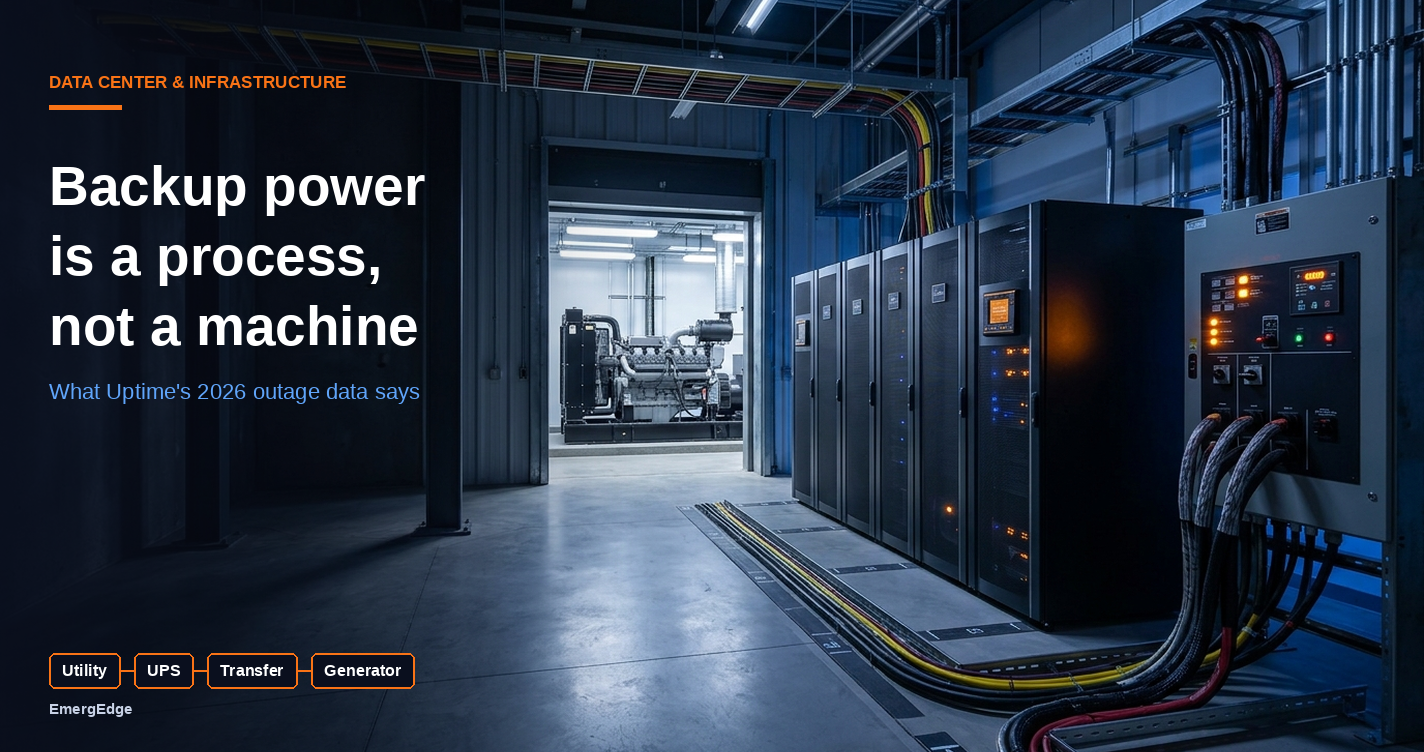
- What are the lead times for upgrades? Cooling plant, switchgear and generators can take far longer to obtain than the project that needs them. Our post on backup power discusses equipment lead times and spares.
- Do we plan for people? Capacity includes the team that can operate what you add.
What This Means for IT Leaders
Capacity planning is a forecasting problem before it is an engineering problem. The 76% concern figure is a reminder that uncertainty about demand, not a shortage of equipment, is what most leaders are managing. The practical response is to plan against all the limits at once, name an owner for demand, and test the plan against the scarcest resource instead of the most visible one.
The question to take away: if a large project arrived tomorrow, which limit would you hit first, and how long would it take to lift?
Sources: Uptime Institute, "Global Data Center Survey 2026" executive summary (July 2026); Uptime Institute press release, "16th Annual 2026 Global Data Center Survey" (July 28, 2026).